Colour Theory for Men: Building Harmonious Outfits
Navy and brown, charcoal and burgundy, tan and forest green — learn the colour pairings that elevate an outfit from good to exceptional.
By Kwaku Acheampong
Why Colour Matters More Than Fit
Fit is the foundation of dressing well — but colour is what makes an outfit memorable. A man can wear a perfectly fitted suit in a colour combination that jars, and the technical excellence will be invisible. Conversely, a thoughtfully chosen palette can make even modest tailoring look intentional and sophisticated.
Most men approach colour defensively, defaulting to navy, grey, and white because these feel safe. They are safe. But "safe" and "excellent" are not the same thing. Understanding why certain colours work together — not just which ones, but why — unlocks the ability to dress with genuine confidence rather than borrowed caution.
The Menswear Colour Wheel
Men's clothing operates within a narrower palette than womenswear, which is both a constraint and a gift. The neutral anchors — navy, charcoal, grey, tan, camel, olive, brown — provide a stable foundation. Earth tones and muted accent colours — burgundy, forest green, rust, mustard, slate blue — provide the character.
The key principle is tonal harmony. Colours don't need to be complementary in the classical chromatic sense — they need to share an underlying temperature. Warm tones (browns, tans, rusts, olive, burgundy) group naturally. Cool tones (navy, charcoal, grey, slate, forest green) group naturally. Mixing temperatures can work — but requires a considered bridging element to prevent the ensemble from feeling disjointed.
"Colour does not need to contrast. It needs to converse."
The Great British Pairings
Some colour combinations have earned their place in the menswear canon through decades of proven elegance:
Navy and Brown — the single most sophisticated pairing in men's tailoring. A navy suit with tan or chocolate brown shoes and belt. The contrast is warm, the tones harmonise, and the combination reads as both formal and approachable.
Charcoal and Burgundy — winter dressing at its most assured. A charcoal flannel suit with a deep burgundy tie and white shirt. The cold grey of the charcoal is warmed by the burgundy without being overwhelmed by it.
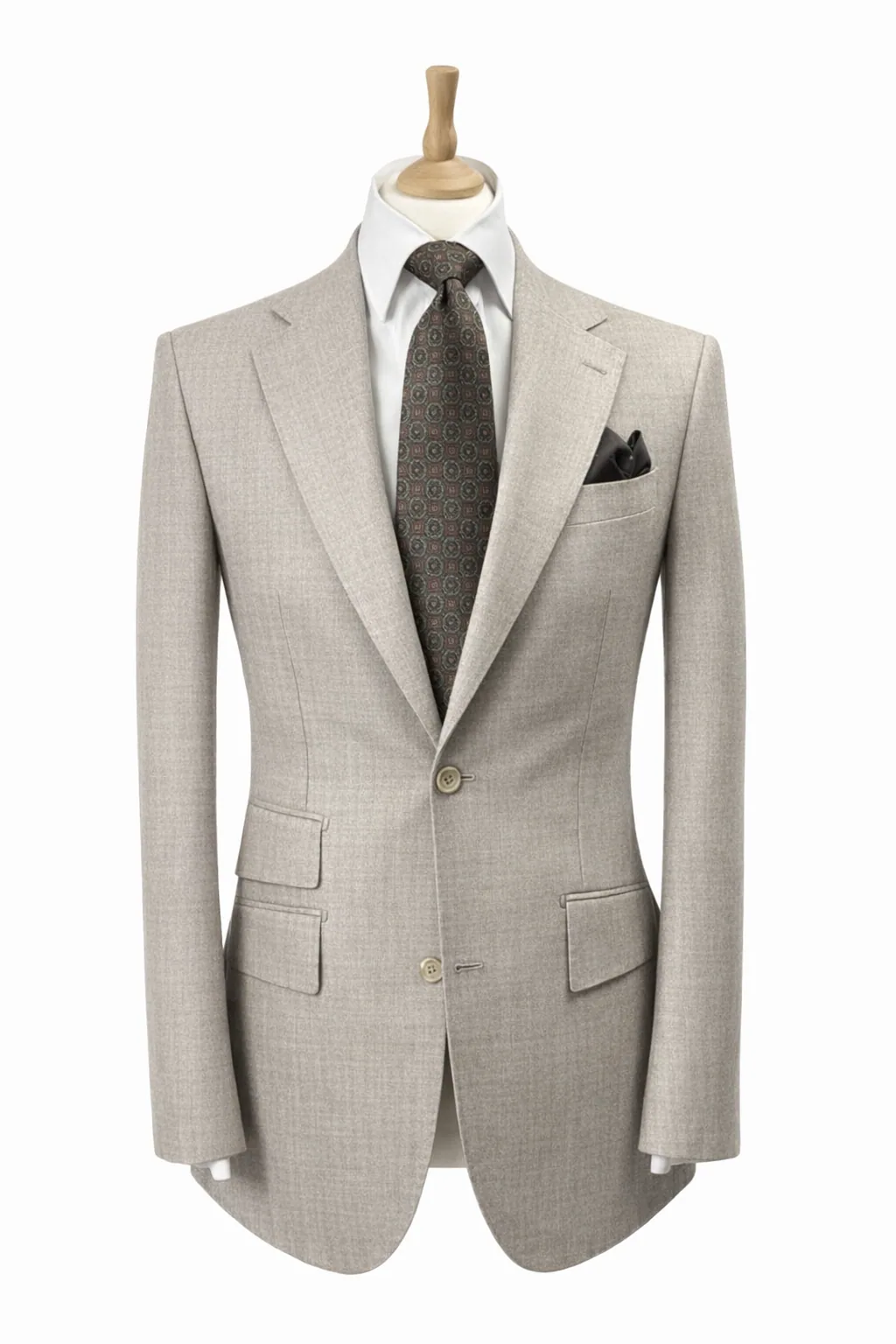
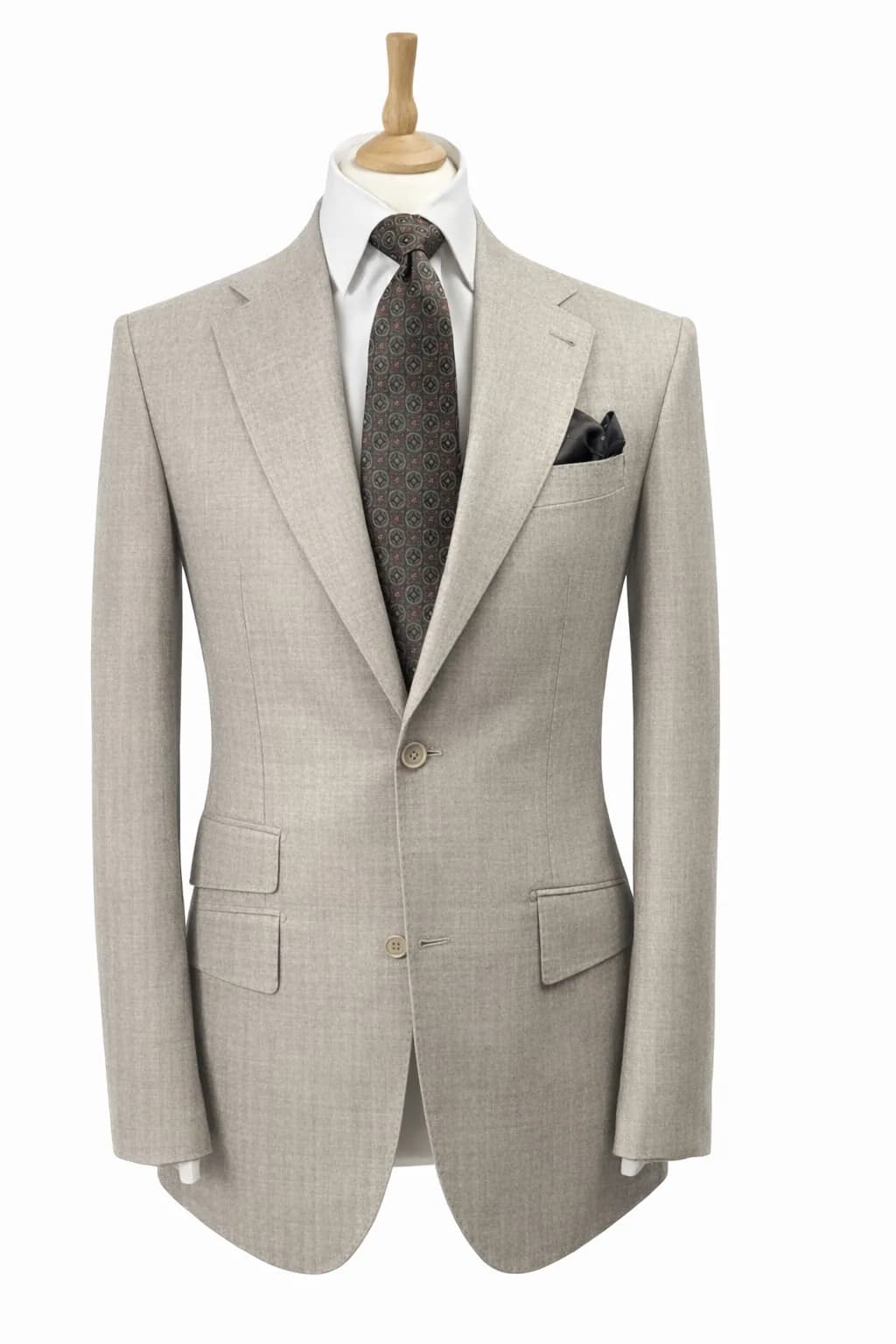
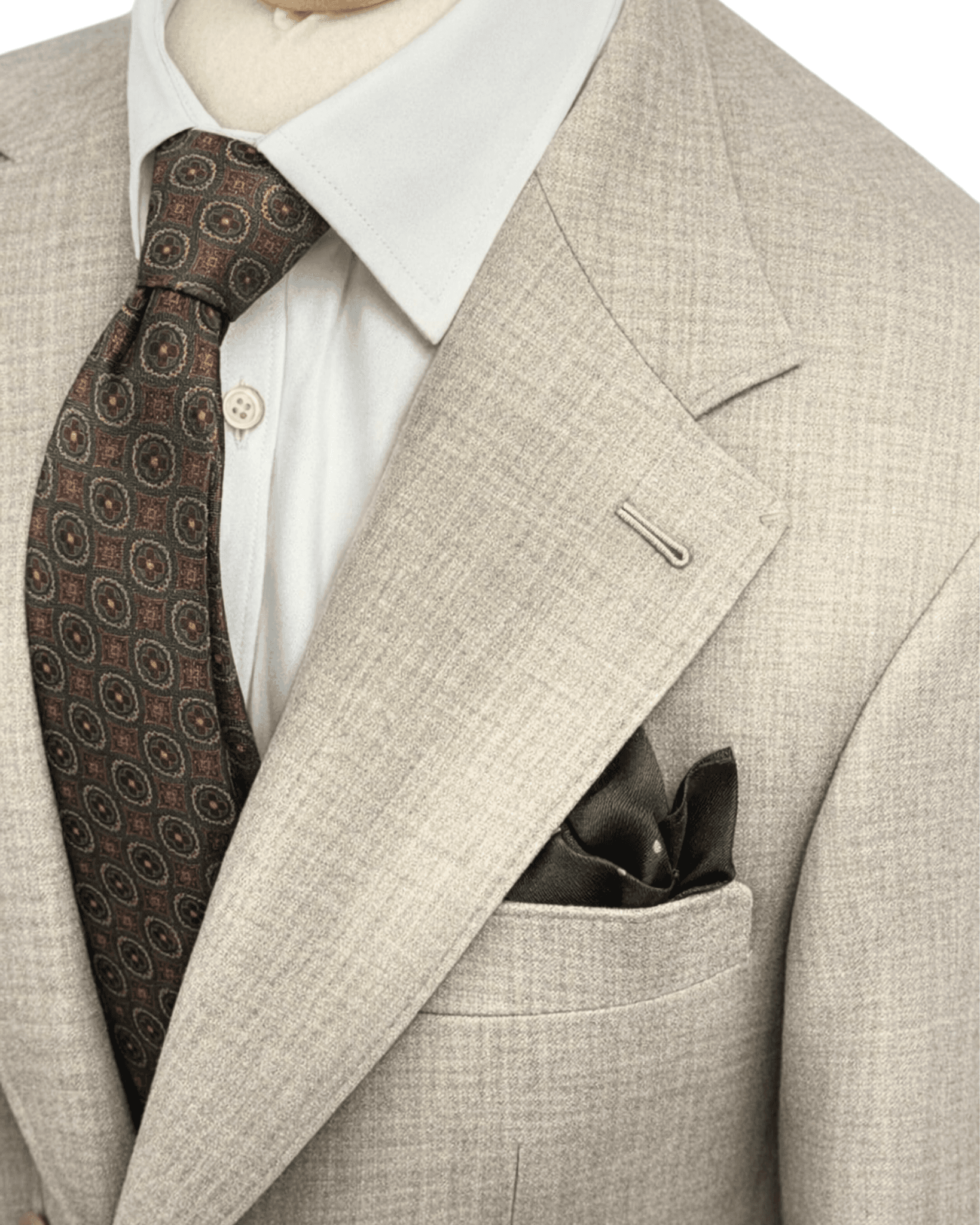
Tan and Forest Green — a countryside pairing that works equally well in the city. A tan suit or blazer with a forest green knit tie and brown suede shoes. Earthy, textured, and quietly confident.
Mid-Grey and Camel — clean and contemporary. A mid-grey suit with a camel overcoat draped over the shoulders. The two neutrals create depth without colour conflict.
Pattern and Colour Together
When pattern enters the equation, the rules shift. A suit with a visible check or stripe already carries multiple colours — your accessories need to respond to that, not compete with it.
The principle is scale contrast. A large windowpane check calls for a small-scale tie pattern (fine stripes, small dots) and vice versa. The colours in the tie should echo one of the secondary colours in the suit — picking up the overcheck colour in a glen plaid, for instance.
Solid ties are often the correct answer when a suit has strong pattern. They create visual rest. The interest comes from the texture of the cloth — a wool grenadine tie in a deep jewel tone, a silk knit in olive or burgundy — rather than from pattern competition.
Seasonal Colour Instincts
Seasonal dressing is not about being literal — you are not required to wear green in spring or orange in autumn. It is about instinct and appropriateness. Heavy, dark cloths in deep tones feel natural in winter. Lighter cloths in paler, more washed tones feel natural in summer. Trusting this instinct produces outfits that feel composed rather than calculated.
Linen in the summer: stone, sand, white, pale blue. Flannel in the winter: charcoal, navy, dark grey. Tweed in autumn: rust, tan, olive, heather tones. These are not rules — they are starting points. Your departures from them should be deliberate.
"Dressing well in colour is not about being bold. It is about being coherent."
Building Your Colour Foundation
Start with your anchors. If you own a navy suit, a charcoal suit, and a mid-grey suit, you have covered the vast majority of occasions. Build your shirts around white, pale blue, and ecru. From there, introduce accent through ties, pocket squares, and accessories in the warm earth tones — burgundy, rust, tan, forest green.
Once this foundation is established, you can begin to add colour through cloth — a tan linen blazer, a mid-brown suit, a pale olive sport coat. The foundation makes the addition legible.
Colour is not something you add to an outfit. It is something you build into a wardrobe over time. The most elegantly dressed men are not wearing more interesting colours than anyone else — they are wearing the right colours in the right combinations, with the right weight of cloth, in the right season. That is the whole art.