The Unwritten Rules of Black Tie Dressing
Dinner jacket, bow tie, patent shoes — black tie has a strict vocabulary. Know the rules before you break them.
By Kwaku Acheampong
Understanding the Dress Code
Black tie is the most precisely codified of all dress codes — and the most frequently misunderstood. It is not simply "formal". It is a specific vocabulary of garments and accessories that evolved in the late nineteenth century as a slightly relaxed alternative to white tie, and which has since become the standard formal dress code for most evening occasions in Britain and beyond.
When an invitation says "black tie", it means something specific. Knowing what it means — and knowing when you can deviate, and when you cannot — is the foundation of dressing well for formal occasions.
The Dinner Jacket
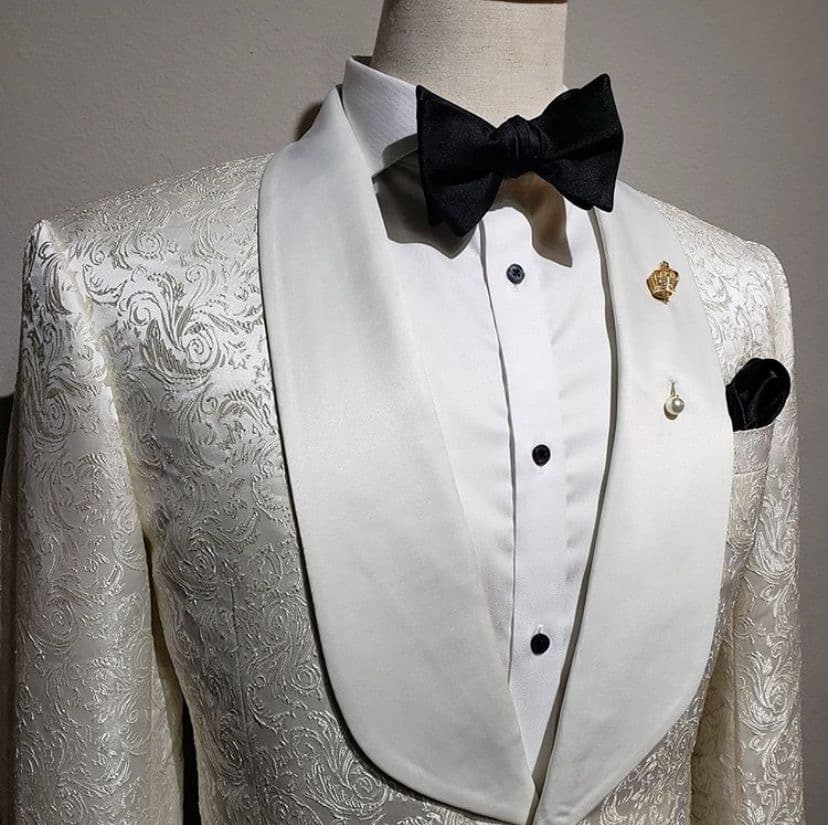
The dinner jacket — never called a tuxedo outside of North America — is the centrepiece of black tie. It should be black or midnight navy (midnight navy reads as darker than black under artificial light, which is why many sartorialists prefer it). Single-breasted with a shawl collar or peaked lapels. Double-breasted if you know what you're doing.
The lapels must be faced in silk — either grosgrain or satin. This is non-negotiable. A dinner jacket with wool or tweed lapels is not a dinner jacket; it's a suit jacket masquerading as one.
The jacket should be cut with a degree of suppression — a black tie silhouette is leaner and more precise than a lounge suit. The waist should be defined. The chest clean. Shoulders precise.
"A dinner jacket should fit as if it were made for you. Because, ideally, it was."
Trousers
Black tie trousers follow strict rules. They must have a single satin or grosgrain stripe running down the outside of each leg — this mirrors the lapel facing and ties the ensemble together visually. No turn-ups. No belt. The trousers should be worn with braces (suspenders) or sit on the natural waist without additional support.
Fit is everything. Black tie trousers that pool at the ankle or flare at the thigh look careless. A clean break or no break at all is correct. The stripe should fall straight, uninterrupted, from hip to hem.
The Shirt
A black tie shirt should be white. Full stop for most occasions. The front should be either a bib of marcella (piqué cotton, textured and bright white) or pleated — both are correct, the choice is personal. The collar should be a turndown collar or, for a more traditional approach, a wing collar.
Wing collars require a bow tie to be tied at the correct height and fullness to frame them properly. They can look magnificent or disastrous depending on execution. For most men, a turndown collar is the more forgiving and arguably more elegant choice.
Cufflinks are mandatory. The shirt should have double cuffs — barrel cuffs are incorrect for black tie. Plain silver or gold cufflinks are always correct. Onyx, mother-of-pearl, or enamel links add character without breaking the code.
The Bow Tie
It must be tied. A pre-tied bow tie is an unambiguous statement that you either don't know how to tie one or couldn't be bothered to learn. Neither reflects well.
Tie your bow tie in silk — grosgrain or satin — in black. The width should broadly match your lapel width. The bow should be slightly asymmetric when tied by hand; this is a feature, not a flaw. It signals that a human being tied it, not a machine.
Learn to tie it. It takes twenty minutes of practice. The payoff is permanent.
"An imperfectly tied bow tie is more distinguished than a perfect clip-on. One says you tried. The other says you didn't."
Shoes and Accessories
Black patent leather Oxford shoes are the canonical black tie shoe. Court pumps (opera slippers with a grosgrain bow) are the more rarified choice. Black velvet slippers with embroidered motifs are acceptable at less formal events and dinner parties.
A white pocket square in a flat presentation — the television fold, lying clean and flat in the breast pocket — completes the ensemble without competing with it. No coloured pocket squares. No printed patterns. The pocket square and the bow tie should recede, not announce themselves.
A watch is acceptable; a dressier, thinner watch is preferable. A pocket watch with a dress waistcoat is exemplary.
When to Break the Rules
Once you understand the code completely, you earn the right to edit it. A velvet dinner jacket in deep burgundy or forest green reads as deeply considered, not rule-breaking. A double-breasted jacket with peak lapels is bold but correct. A black tie worn with a lounge shirt and a navy jacket for a relaxed dinner party can work if the fit is immaculate and the overall impression is deliberate.
The difference between breaking the rules elegantly and simply getting it wrong is knowledge. You must understand what you're departing from, and why. Deviation without understanding is not individuality — it's just error.